
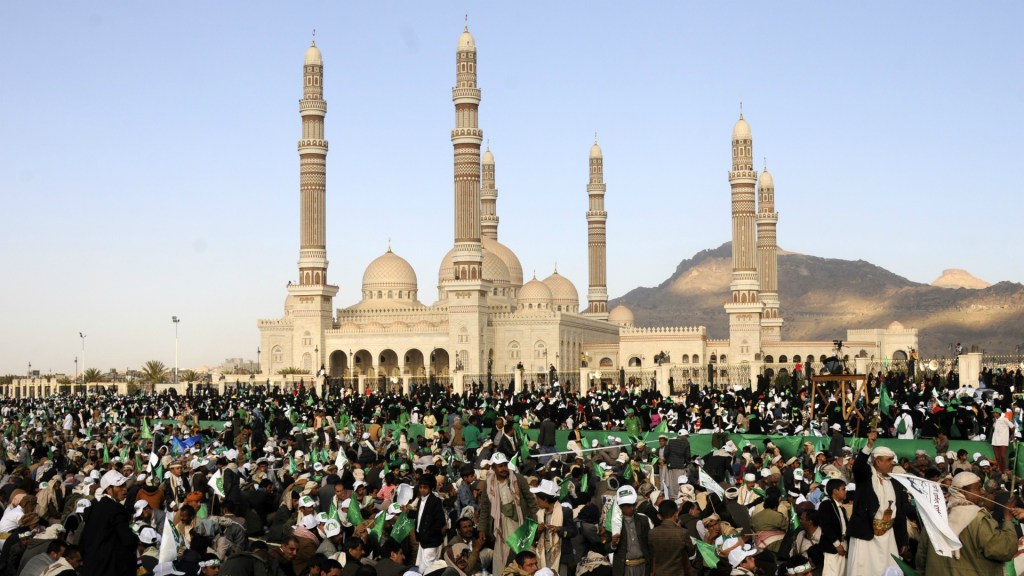
As we enter the month of Rabiʽ al-Awwal, the annual Mawlid debate surfaces once more. People wonder if celebrating the Messenger’s (ﷺ) birthday is permissible, or an innovation (bid’ah), or even obligatory? But today, I want to steer us away from this debate and invite you on a journey – a journey to uncover the true essence of the Messenger of Allah’s (ﷺ) legacy.
Understanding the life of the Messenger (ﷺ)
Let’s start by delving into the core of the Messenger’s (ﷺ) life, the one we remember in the month of Rabi’ al-Awwal. Have we ever taken a moment to truly understand who he was, why people who once trusted him turned against him, why he migrated, the hardships he endured, and the relentless opposition aimed at extinguishing the message he brought to mankind? These questions help us grasp the extraordinary life and mission of the Messenger (ﷺ).
You might wonder why we should bother with all these details. Well, here’s a question in return: Are we celebrating the birth of Muhammad Ibn Abdullah, or are we honouring Muhammad, the Messenger of Allah (ﷺ)? They might seem the same, but they represent different aspects of his identity. Our love for the Messenger (ﷺ) isn’t just about his person; it’s deeply rooted in his role as Allah’s Messenger. He was chosen as the final messenger to convey Allah’s (SWT) message to all of mankind, a mission that makes him the most beloved and best of creation. So, while our love for him is beyond question, it calls us to understand his life in the context of the message he carried.
The mission of the Messenger (ﷺ)
To truly grasp the importance of the Messenger’s (ﷺ) mission, we need to turn to the Qur’an. Allah (SWT) tells us:
“We have not sent you, [O Muhammad], except as a mercy to the worlds.“
(Surah Al-Anbiya; 21:107)
This verse highlights his role as a source of divine mercy, not just for a specific group or time, but for all of creation.
The Qur’an further clarifies his mission:
“He it is Who has sent His Messenger (Muhammad) with guidance and the religion of truth (Islam), that He may make it (Islam) superior to all religions. And All-Sufficient is Allah as a Witness.”
(Surah Al-Fath; 48:28)
This verse portrays the Messenger’s (ﷺ) mission as a bearer of guidance and the message of Islam, destined to prevail over all other belief systems.
These verses reveal the universal nature of the Messenger’s (ﷺ) mission and the compassion and guidance he brought to humanity. But do we truly understand his mission? Do we realize that it extends beyond his time and place to encompass our lives too? And most importantly, do we strive to live by his example in our daily lives? These reflections prompt us to assess our dedication to the mission of the beloved Messenger (ﷺ), the Messenger we deeply revere and claim to follow.
Self-reflection in Rabi’ al-Awwal
At this point, I hope you’re beginning to sense the gravity of this discussion. Regardless of where you stand on Mawlid celebrations, a more fundamental question arises; Why does this choice matter if we haven’t grasped the significance of the points I’ve shared? If we’re not making a sincere effort to emulate his way of life, how can debates or celebrations truly define our connection with him?
So, during the month of Rabi’ al-Awwal, when we remember the Messenger’s (ﷺ) birth, let’s put aside the birthday cake notion. Instead, let’s look inward. It’s fine to feel joy as we remember the birth of the best of humanity, but the real focus should be on self-reflection. Let’s think deeply about the Messenger’s (ﷺ) life and the importance of the message he brought, one that rescued humanity from darkness and brought them into the radiant light of Islam.
This reflection shouldn’t stop at his birth; it should also touch upon his passing. Some say his death marked a sign of the Day of Judgment approaching. It’s a weighty thought that should make us examine our own lives. Are we living in line with the way the Messenger (ﷺ) taught us? What do we think about the absence of the Shari’ah, the system of Islam he worked so hard to establish, in our world today? And most importantly, are we taking meaningful steps to fill that void? These are the profound questions we should be asking during Rabi’ al-Awwal.
Let’s use this time of the year as an opportunity for deep thinking. Let’s explore the life and mission of the Messenger (ﷺ) and our deep connection with him. Ultimately, this reflection is far more significant than any debate or celebration. It helps us understand our Deen better and reinforces our role in continuing the legacy of the Messenger (ﷺ).
The Hijrah vs the Mawlid
This is something we should also consider. Umar ibn Al-Khattab (raḍiAllāhu ‘anhu) as the Caliph consulted with the companions as to what event should be used to signify the beginning of the Islamic calendar. There were many options to choose from; one of which was whether to use the birth of the Messenger (ﷺ). But they chose the Hijrah—the migration of the Messenger (ﷺ) as the most significant event to mark the start of the calendar. This choice carries profound meaning; it signifies the start of Islam as a comprehensive way of life, profoundly impacting every aspect of human existence.
This decision reflects the transformative power of Islam. It goes beyond historical events; it’s a guide for our entire lives. Our Deen isn’t about isolated moments; it’s a path toward righteousness and enlightenment.
This moment in history makes us rethink how we celebrate the Messenger’s (ﷺ) Mawlid. The Hijrah was a monumental turning point for Islam—a moment of strength and truth overcoming falsehood. So, how does our Mawlid celebration measure up to something so important? This question prompts us to re-evaluate our priorities and see the Hijrah as a symbol of Islam’s resilience and triumph.
Conclusion
So, brothers and sisters, let’s embark on this journey of deep thinking and self-discovery during the month of Rabi’ al-Awwal. Let’s delve into the life and mission of the Messenger (ﷺ) with open hearts. We’re not merely seeking to understand it; we want to live it every day.
By doing so, we honour him (ﷺ) in the most profound way—by striving to be the best versions of ourselves and by working tirelessly to bring Islam back to its rightful place on Earth. It’s not an easy path, but that’s what it means to be a member of the Ummah of the best of creation, our beloved Messenger (ﷺ). It’s about the struggle and the effort to make this world a better place and follow in his (ﷺ) noble footsteps.
“Indeed, in the Messenger of Allah you have an excellent example for whoever has hope in Allah and the Last Day, and remembers Allah often.”
(Surah Al-Ahzab; 33, 21)


 Voice Of The Ummah
Leave a comment