
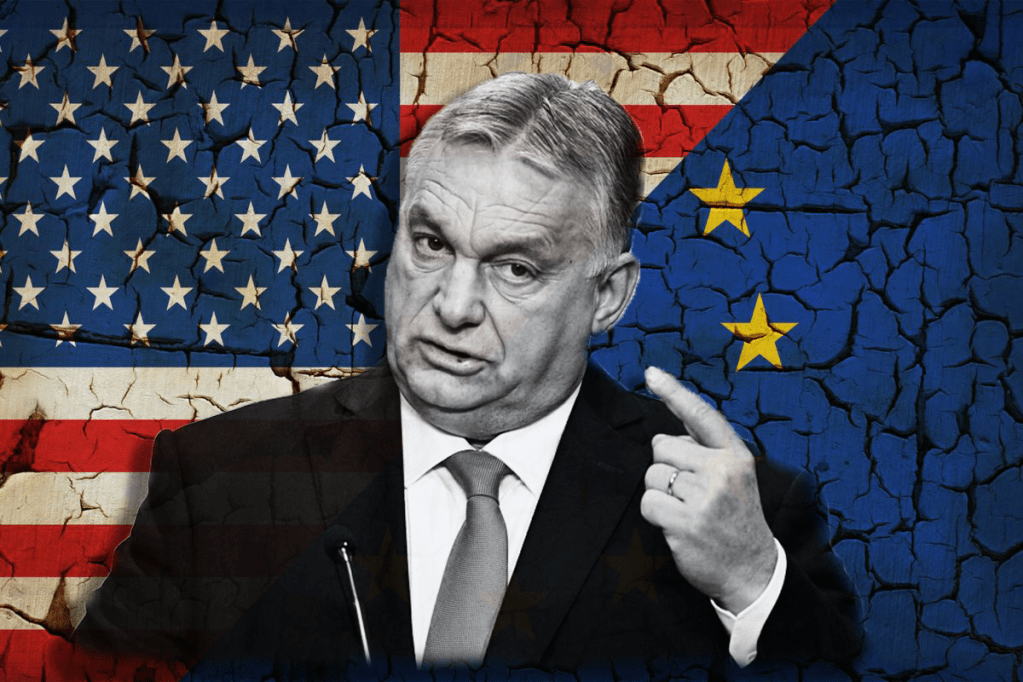
On December 14 2023, the European Union convened the European Leaders Summit to discuss the proposed funding package worth €54bn for Ukraine following the impasse in the US over future funding.
At this summit, Hungary’s Viktor Orban vetoed the proposal which came after the EU agreed to open membership talks with Ukraine in a move opposed by Orban who stated that, “Ukraine is not ready for EU membership.”
Russia’s Kremlin spokesman, Dimtry Peskov, stated, “Negotiations to join the EU can last for years or decades. The EU has always had strict criteria for accession, and it is obvious that at the moment neither Ukraine nor Moldova meets these criteria.”
Many saw this as retaliation by Orban for the EU’s failure to release over €31bn in ‘cohesion’ funds owed to Hungary due to what the EU calls the failure by Hungary to implement laws that protect the rule of law and human rights which includes ensuring the independence of the judiciary.
As a consequence, the standoff between Hungary and the EU over the proposed funding to Ukraine led to EU officials and heads of State to discuss numerous options of bypassing the Hungarian veto, including the implementing of what Italy’s prime minister described as ‘Plan B’ and president Macron stating, “We have the means and they have been planned . . . so as to keep supporting Ukraine in the coming months. We won’t be blocked by the decision today.”
The EU released approximately €10bn as a sign of goodwill and that led to Orban to concede to Ukraine beginning ascension talks by not being present during the vote at the summit. However, the question of aid to Ukraine remained unresolved as both Orban and Meloni wanted the EU to provide additional funding for other priorities eventually leading to Orban to effectively veto the aid using the EU budget.
Daniel Hegedüs, senior fellow at the German Marshall Fund think-tank, said, “It was a low point for the EU and a new high point of escalation.” Another official described Orban by stating that, “He is always transactional, never ideological,” adding, “And we shouldn’t underestimate that he likes being at the centre of attention.” Whilst others considered suspending Hungary’s voting rights by invoking Article 7 thus side-lining Hungary from any vote on the aid and other matters, with one official stating, “Maybe can create more trouble…maybe Hungary can force us to use few different tools. But ultimately Hungary cannot stop us providing money to Ukraine.”
For his part Orban hit back at the proposed aid on the 18 December by stating, “To commit in advance to giving Ukraine €50bn for [four] years from the EU budget, which has no money to fund this, so forcing new borrowing, that is a bad decision,” adding, “We should make a good one instead.”
He also dismissed the threat of the EU to suspend Hungary’s voting rights ahead of an emergency summit called for February 1 2024, stating, “The EU treaty is clear that such a procedure can only be launched in case of a sustained breach of the rule of law,” he said. “But the European Commission has just said . . . our justice system is in order. I am not concerned.” As a result, and through further horse trading, the EU agreed to release another €900m to Hungary in January and provided further concessions to Hungary on the agreement such as giving Hungary the option to review the deal after year 1 (the deal to fund Ukraine covers a 4 year period).
However, and ahead of the summit scheduled for February 1, the US ambassador to Hungary, David Pressman, made a remarkable intervention by attacking Orban in an interview with the Financial Times on 26 January 2024. He remarked, in relation to the Hungarian government’s approach to international affairs, that it was premised upon, “imagined invaders” and a “fantasised Hungarophobia.” He added that the approach taken by Orban served domestic purposes and explained some of his policy positions but, “at the end of the day, it’s a fantasy.”
Pressman went on to criticise Orban for his support of Trump and his call demonstrates how the US, and the EU leadership are prepared to blackmail and threaten any country that attempts to proceed in another direction, even if they were not serious about deviating from the plan and was using its position as leverage to gain economic benefits and concessions as in the case of Hungary.
The whole episode demonstrates that the US has not only been able to cajole the Europeans behind NATO but have also been able to extract aid from them in order to fuel a war that is not of their making and not in their interests. It also demonstrates that the EU would prefer a Biden administration to that of a Trump one, a case of supporting the ‘lesser of the two evils!’




 Voice Of The Ummah
Leave a comment