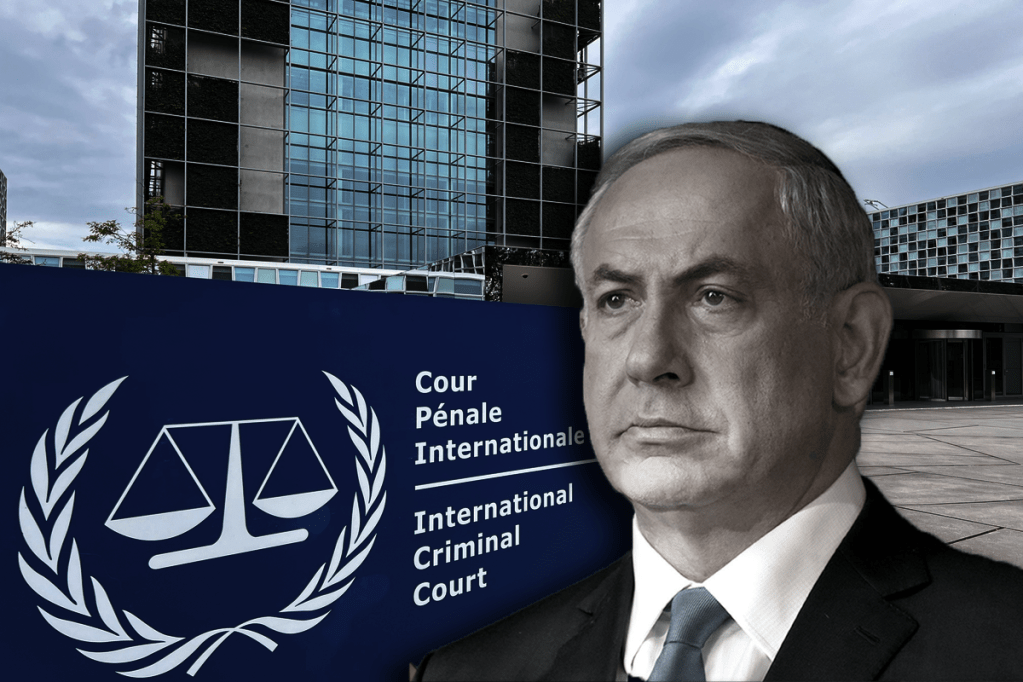
The International Criminal Court (ICC) recently issued an arrest warrant for Netanyahu and Gallant, a move that has sparked debate and raised eyebrows globally. On the surface, it seems like a bold declaration that even leaders of “Israel” could face justice. But how many truly believe that Netanyahu will be arrested and tried?
To answer this question, we must dive deeper into the concept of international law and the broader framework of the so-called “international community.” Are these systems genuinely designed to deliver justice, or are they merely tools wielded by the powerful to maintain their dominance? Let’s examine their origins, inherent biases, and glaring hypocrisies.
The Origins of International Law: A Eurocentric Foundation
The roots of international law lie in the Treaty of Westphalia (1648), which established the modern state system. This was not a global initiative but a Eurocentric framework created by European powers, for European powers. Principles such as sovereignty and equality of states applied only to the “civilised” nations—Christian European states. Non-European lands were excluded, their peoples subjected to colonial rule, and their resources exploited.
Hugo Grotius, often called the “father of international law,” theorised a “law of nations,” but it was never truly universal. It was a law for European powers, while other nations were governed by unequal treaties or outright conquest. This system institutionalised a hierarchy of civilisation, leaving non-European societies at the mercy of colonisers.
Noam Chomsky summarised this reality in 2021: “For the powerful, crimes are those that others commit.”
The ICC: A Tool of Selective Justice
The ICC, established to hold perpetrators of serious crimes accountable, exemplifies the selective nature of international law. While its mission sounds noble, its actions tell a different story. The court has disproportionately targeted African leaders, often ignoring the crimes of Western nations. The architects of wars in Iraq and Afghanistan, the masterminds of drone strikes, and the perpetrators of torture remain untouched.
John Pilger aptly described this bias: “The ICC has become a court for African despots and out-of-favour leaders. The architects of Western wars of aggression remain immune.” Similarly, Bolivian President Evo Morales asked: “Where is the prosecution of those who bombed Iraq or Afghanistan?”
Consider Guantanamo Bay. For over two decades, the US has detained individuals without charge, subjecting them to torture and inhumane treatment in direct violation of international law. Yet, no accountability exists for these actions. Guantanamo Bay is a stark example of the double standards in justice—one set of rules for the powerful, another for everyone else.
Then there’s Abu Ghraib, where US forces humiliated and tortured Iraqi prisoners during the Iraq War. The horrifying images of abuse shocked the world, but accountability was minimal. Low-ranking soldiers were punished, while the architects of these policies walked free.
The “International Community”: A Restricted Club
The international community is another concept that, in theory, sounds noble—nations working together for peace and justice. In practice, it’s a restricted club dominated by Western powers. From the League of Nations to the United Nations, real power rests with the five permanent members of the UN Security Council, most of whom are Western nations. Their veto power allows them to block actions that threaten their interests or those of their allies.
Boutros Boutros-Ghali, former UN Secretary-General, acknowledged this imbalance in 1994: “The UN is only as effective as its member states allow it to be. And the powerful states will always ensure that its decisions align with their interests.”
Recent events highlight this hypocrisy. The international community swiftly imposed sanctions on Russia for its invasion of Ukraine. Yet, “Israel” has violated international law for decades, from illegal settlements to its blockade of Gaza and the targeting of civilians, without facing meaningful consequences. Amnesty International stated in 2022: “Almost every part of ‘Israel’s’ treatment of Palestinians violates international law, yet the international community has failed to hold it accountable.”
Similarly, Human Rights Watch noted in 2023: “The ongoing siege of Gaza is a blatant violation of international humanitarian law, but it is supported through the West’s arms trade and diplomatic cover.”
Islam, the Ummah, and International Law
As Muslims, we must ask ourselves: what does this international community mean for us? The truth is, this concept fundamentally contradicts our worldview. Islam teaches us that we are part of a single Ummah—a global community bound not by race or nationality but by our shared belief in Allah and His Messenger (SAW). This concept of the Ummah is comprehensive, encompassing our spiritual, political, economic, and social systems.
Allah (SWT) states in the Qur’an:
“Indeed, this Ummah of yours is one Ummah, and I am your Lord, so worship Me.”
(Surah Al-Anbiya: 92)
The Prophet Muhammad (SAW) described the unity of the Ummah, saying:
“The believers are like one body; if one limb aches, the whole body reacts with sleeplessness and fever.”
(Sahih Muslim)
This interconnectedness of the Ummah should resonate with us when we see the suffering of Muslims in Gaza, Yemen, Kashmir, or elsewhere. However, the international community divides us with artificial borders and systems that weaken our unity. It forces us to operate within frameworks that perpetuate oppression, rather than addressing its root causes.
The Contradictions of International Law
The international community and its laws are built on a secular, Western foundation, with principles such as sovereignty and democracy emanating from Western civilisation. These are fundamentally at odds with Islamic teachings. Allah (SWT) warns us in the Qur’an:
“Do you not see those who claim to have believed in what was revealed to you, [O Muhammad], and what was revealed before you? They wish to refer legislation to Taghut, while they were commanded to reject it; and Satan wishes to lead them far astray.”
(Surah An-Nisa: 60)
Even if Muslims accept the system of international law, it would never fully accept us. Islam is demonised, Sharia is vilified, and our political movements are suppressed. Pakistani Prime Minister Imran Khan highlighted this in 2020: “When Muslims suffer, the international community is silent. They lecture us on human rights but ignore the rights of Muslims in Kashmir, Palestine, and elsewhere.” Malaysian Prime Minister Anwar Ibrahim similarly remarked in 2023: “The international community’s selective outrage reflects its prejudice. It supports regimes oppressing Muslims while claiming to stand for universal values.”
Will Netanyahu Be Prosecuted?
This brings us back to the original question: will Netanyahu and Gallant face justice at the ICC? Given the history of international law and the selective enforcement of justice, it’s hard to believe this is about accountability. Instead, the warrant may be a political tool, perhaps even a warning from the US to Netanyahu to align with American plans for Gaza and Palestine.
Trust in Allah’s Justice
Allah (SWT) has given us a system that is comprehensive, just, and perfect.
“This day I have perfected for you your religion and completed My favour upon you and have approved for you Islam as your religion.”
(Surah Al-Ma’idah: 3)
Justice doesn’t come from man-made systems—it comes from Allah (SWT) alone. It’s time for Muslims to stop looking to the flawed international community for answers and start reviving the system of Islam as the true solution.


 Voice Of The Ummah
Leave a comment