
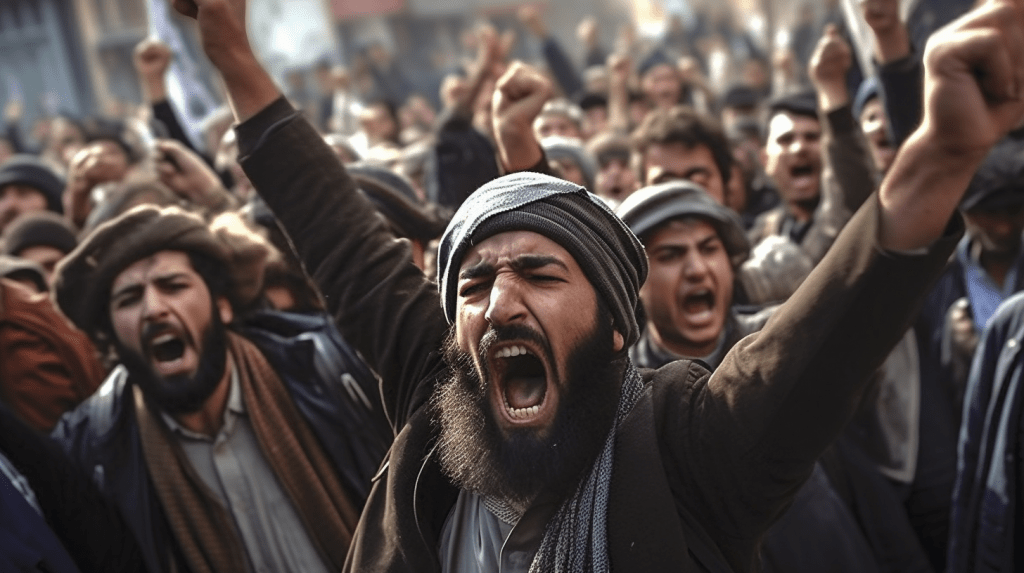
The claim made by a certain strand of modern day salafi’s, known as madkhali’s, is that the narrations of the Prophet (SAW) pertaining to obeying the ruler are generic and thus apply to the modern day rulers, in spite of some of these rulers taking authority by force whilst all of them, whether the authority was taken by force or not, rule by non Islamic systems, applying rules that blatantly contradict the Shari’ah.
This write up will explore and expose their claims from the perspective of the traditional jurists.
Validity of the Authority according to Islam
The first question that needs to be tackled is what is understood to be a valid authority from Islam.
There is a case from among the cases of deviation that are less than the Kufr Al-Bawaah (blatant/open disbelief) but take its ruling in respect to the legal legitimacy to use armed force to confront the ruling authority if it becomes prominent or stands out within the society. This is the Ma’siyah Al-Bawaah (the manifest act of disobedience to Allah).
This has been indicated to in a Riwaayah (narration) that Ibn Al-Hajar quoted in his ‘Al-Fat’h’ for the Hadeeth relating to opposing those in authority:
” وَأَلَا تُنَازِعَ الأَمْرَ أَهْلَهُ إِلا أَنْ تَكُونَ مَعْصِيَةُ اللَّهِ بَوَاحاً
“And that we should not dispute the authority of its people unless it is a manifest act of disobedience to Allah.”
The Mafhoom (implicit understanding) of this narration in respect to disputing or opposing the authority of its people is:
Fighting the people of authority if the Ma’siyah of Allah is Bawaah i.e. Evident and publicly or openly demonstrated whilst they (the rulers) do not confront it by changing it or by denunciation!
Another case from amongst the cases of deviation that takes the ruling of the Kufr Al-Bawaah even if it is not itself Kufr Bawaah. This case is demonstrated in the narration:
مَا لَمْ يَأْمُرُكَ بِإِثْمِ بَوَاحٌ
“As long as he does not command you with a blatant sin.” “
[Fat’h al-Baari ibn Hajar]
It is clearly evident that no Muslim majority state in the world is free from “commanding you with blatant sin”. The economic systems alone which are usurious are evidence enough that there is an open manifestation of sin within the ruling authorities and hence obedience to them is not obligatory.
Secondly, the authority of one who has taken it by force is invalid. In the Musnad of Ahmad Bin Hanbal he recorded the Qawl of the Nabi:
” مَنْ قُتِلَ دُونَ مَظْلَمَتِهِ فَهُوَ شَهِيدٌ
“Whoever is killed in defence of an injustice (Mazhlamah) against him, he is Shaheed.”
The Ightisaab (usurpation) of the authority from the Ummah is a Mazhlamah from amongst the Mazhaalim (acts of injustice) and it is the Ummah’s right to fight to regain what was usurped from it.“
Ahmad Bin Hanbal also related in his Musnad that the Nabi (SAW) said:
” نِعْمَ الْمِيتَةُ أَنْ يَمُوتَ الرَّجُلُ دُونَ حَقَّهِ
“What an excellent death it is for the man to die in defence of his Haqq (right).”
The Sultah (authority) is a Haqq for the Ummah and as such it is her right to fight until death to regain this right from the one who has taken it without right! And the Messenger in relation to the usurper in general:
عَلَى الْيَدِ مَا أَخَذَتْ حَتَّى تُؤَدِّيَه
“What the hand took is due upon it until it gives it back”[Tirmidhi, Abu Dawood, Ibn Majah]
And the Lafzh (wording( “ما” )Maa) in the Hadeeth establishes generality (Al-‘Umoom) and consequently includes everything that was taken unjustly and usurped, in terms of property, honour, authority or anything. The obligation upon this usurping hand is to return what it has taken to its rightful owner(s). If that is not done, then fighting has been legislated to confront it and to take back that which was taken control over! This, therefore represents the Daleel of the Sunnah of the Messenger of Allah in respect to the Hukm of the Mughtasib (usurper) in general.
That includes the Mughtasib As-Sultah (one who has usurped the authority) because the description of the usurper applies upon him.“
Therefore, whether the authority has been taken by force, or the authority which has been given by the people but the ruler commands manifest disobedience in terms of ruling or both. All the above cases are indicative of an invalid authority from Islam which does not obligate obedience whatsoever.
Prohibition of Multiple Rulers
The second issue I want to shed light on is the prohibition of multiplicity of rulers. The Prophet(saw) said:
إِذَا بُويعَ لِخَلِيفَتَيْنِ فَاقْتُلُوا الْآخِرُ مِنْهُمَا
“If two Khalifahs are given the Bai’ah (pledge) then kill the latter of them” [Muslim]
فَإِنْ جَاءَ آخَرُ يُنَازِعُهُ فَاضْرِبُوا عُنُقَ الْآخَرِ
“Then if another came disputing him then strike the neck of the other.” [Muslim]
An-Nawawi stated in the Sharh (explanation) of Saheeh Muslim:
“If a Khalifah is given the Bai’ah after a Khalifah, then the first Bai’ah is valid and it is obligatory to be faithful to it whilst the second Bai’ah is Baatil and it is Haraam to be faithful to it. And it is Haraam upon him toseek it whether they contracted the second whilst knowing about the contract of the first, whether they were in two lands, or one land, or one of them was in the land of the separated Imaam and the other was in other than it and the ‘Ulamaa have agreed that it is not permitted for two Khalifah’s to be contracted within a single era (time) whether the Daar (land) or Islam was wide and expanded far or not.“
[Nawawi Sharh Muslim]
The following was mentioned in Fat’h al-Baari’:
“And the meaning: If the Khalifah is given the Bai’ah after the Khalifah then the Bai’ah of the first is Saheeh (valid) and faithfulness to it is obligatory whilst the second Bai’ah is Baatil (invalid)”. Ibn Hajar then quoted the speech of An- Nawawi mentioned above before stating: “And Al-Qurtubiy said: In respect to this Hadeeth i.e. the Hadeeth: “Fulfil the Bai’ah one after the other …” the Hukm (legal ruling) of the first Bai’ah is that it is obligatory to be faithful to it and it was silent about the second Bai’ah, which was stated in the Hadeeth of ‘Arfajah in Saheeh Muslim where it said: “Strike the neck of the other” “
Permissibility of Rebellion
Given it has become clear as daylight that obedience to the rulers of nation statesis not obligatory, the next question that arises is; Is rebellion against them permitted, recommended or obligatory?
Firstly, we need to clarify what rebellion is and secondly answer the question if the Muslims are required to take up arms against the modern day rulers.
“The meaning of Al-Khurooj is what is synonymous with with expressions such as “Armed Revolution” or “Civil war” or “Internal fighting” or the use of arms and violence to reach political aims.
The Khurooj here does not mean or imply that it is inevitable that they will begin to use weapons (or force) against the state. It could mean that, just as it could mean the armed resistance resulting from the state wanting to make them submit to the state’s authority by force.”
[At-Tashree’ Al-Jinaa’iy fil Madhaaib Al-Khamsah 1/148-150]
“An example of those who have rebelled (Al-Kharijeen) upon the basis of a Ta’weel (interpretation) or Shubhah, includes those who rebelled against ‘Ali Ibn Taalib (ra) from amongst the people of ‘Al-Jamal’ and ‘As- Siffeen’, when they (falsely) claimed that he knew the killers of ‘Uthman (ra), that he had the means to deal with but did not seek vengeance due to his conniving and collusion with them.”
[Mughni Al-Muhtaaj: 4/123]
“An example of those who have rebelled (Al-Khaarijeen) for the sake of the Dunya (life of this world), like for the purpose of gaining control over the rule and authority, includes what Marwan Bin Al-Hakam in Ash-Shaam undertook against ‘Abdullah Ibn Az-Zubair after the Bai’ah (pledge of allegiance) had been given to Ibn Az-Zubair in Iraq, Egypt, Al-Hijaz and even a large section of Ash-Shaam.”
[Al-Muhalla: 11/98]
As for the faction or group that revolts due to a Shubhah (doubt/suspicion) and interpretation which they have believed makes the revolt obligatory to undertake, then they are Mujtahideen, who are in error and are excused.
Indeed, Ibn Hazm said: “They are rewarded with a single reward due to their good intention”
[Al-Muhalla 11/97]
An-Nawawi related the opinion of Al-Qaadi Al-‘Iyaad in respect to the contraction of the Imaamah (leadership) as follows:
“He (i.e. Al-Qaadi Al-‘Iyaad) said: It is not contracted to the Faasiq initially. If Fisqthen (later) appears from the Khalifah, then some said that it is Waajib (obligatory) to remove him unless Fitnah and war would be the consequence of that …”
Al-Qaadi also said: “Abu Bakr Bin Mujaahid has claimed an Ijmaa’ in respect to thatwhilst some (others) have refuted him based upon what Al-Hussein, Ibn Az-Zubair, the people of Al-Madinah against Bani Umayyah did, in addition to what a great group from amongst the Taabi’een and the first generation did against Al- Hujjaaj with Ibn Al-Ash’ath.” He then said: “And the evidence of the Jumhoor (majority) is that their standing or rising against Al-Hujjaaj was not only because of the Fisq but rather due to what he changed (and altered) of the Shariah.” (Sharh nawawi Sahih muslim 8/36-37).
“The opinion that states the permissibility (Ibaahah) of revolting for deviations that are less than the Kufr Bawaah. Their argument and proof is based upon some of the Sahabah not participating in the Khurooj (rebelling) against the Zhalamah (oppressors) whilst at the same time they did not denounce those who did revolt.”
[Ar-rawdah Al-Buhyah,Sideeq Bin Hasan Al Qanujiy Al-Bukhari 2/520]
Thus we can clearly see that there was a difference of opinion on the permissibility of rebelling against a fasiq (evil doer) but there was an Ijma on rebellion against the one who changes/alters the Shari’ah of Allah in terms of ruling. However, they stipulated refraining from the physical and armed removal of a ruler “if fitnah and war would be a consequence of that”.
Thus, although khurooj or rebellion was permitted against a Khalifah who demonstrated manifest sin in terms of ruling, we were advised against it if the outcome would be greater bloodshed and war and the Ummah lacked the collective capability to remove the ruler. This was in regards to an Imam who had been contracted by the Shari’ah methodology, thus by greater reason its permission with regards to rulers who rule by other than what Allah has revealed.
The reprimand of carrying out such a task unless the necessary capability and ability existed should be taken into account against rulers who make legislation by other than Islam and would not hesitate to massacre their own populations to maintain their seat of authority.
The Obligation in our Reality
The question then arises of what the obligation is in our reality with regards to those who have wrestled authority over the Ummah by force, or misuse it to apply non-Islamic laws?
The answer is building the necessary means of public opinion and popular base, that includes influential people from within positions of power and authority that would possess the ability to move alongside the Ummah to topple the regimes without a greater fitnah (dissension) and war that would cripple the masses further as we saw in Syria.





Leave a comment